Shure SM7B Review: The Broadcast Legend, Honestly Assessed
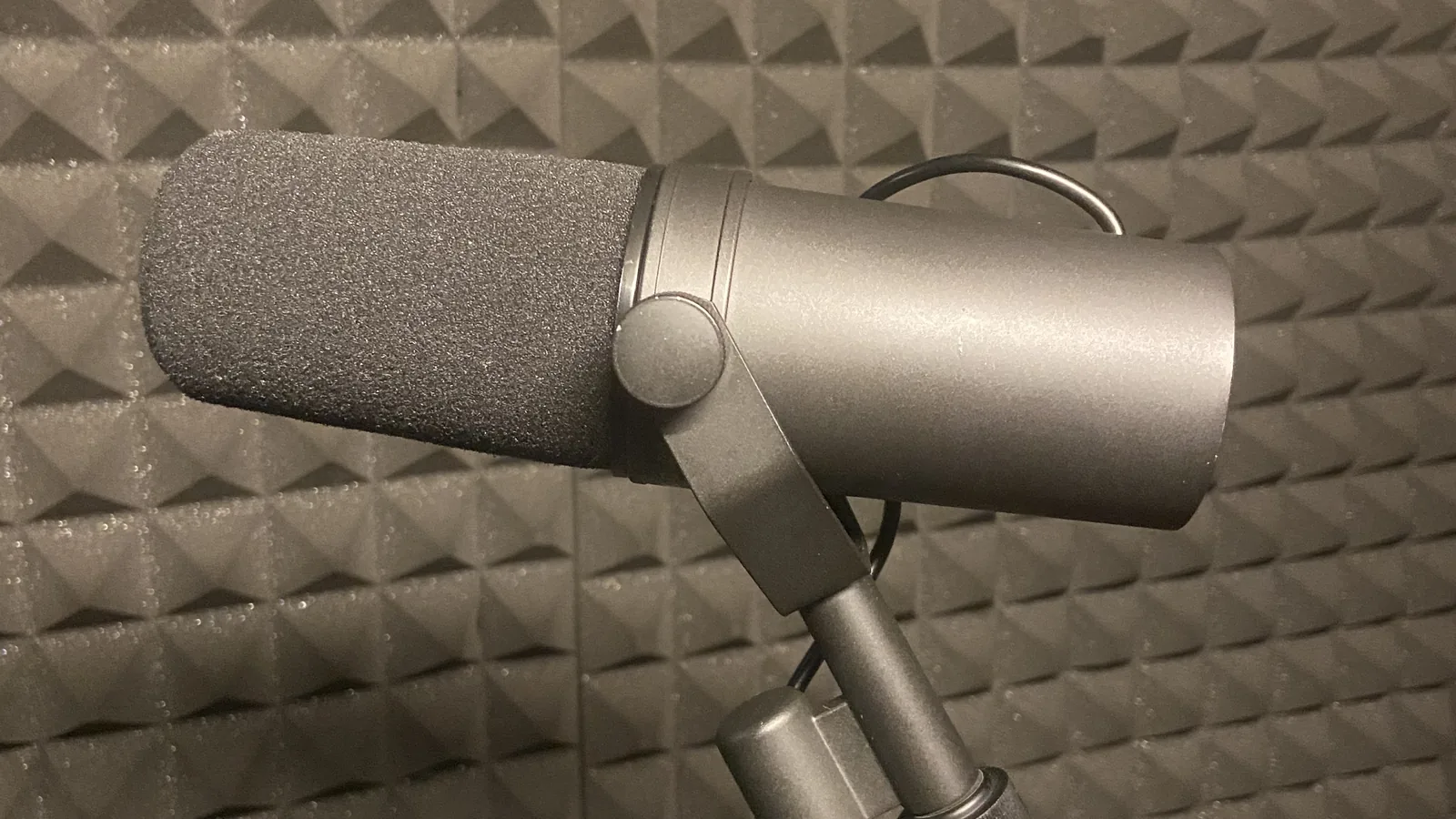
The SM7B is the microphone behind Thriller, countless radio stations, and most of the top podcasts you listen to. For creators, its superpower is rejection: it captures your voice and ignores your room. But it's a hungry mic — without enough clean gain it sounds thin and quiet, and that means budgeting for more than just the microphone.
Overview
The catch: its output is famously low. You'll need around 60dB of clean gain, which means a quality audio interface or an inline preamp like a Cloudlifter or FetHead. Factor that into the real cost.
Key specs
| Type | Dynamic, cardioid |
|---|---|
| Connection | XLR (requires audio interface) |
| Frequency response | 50Hz – 20kHz |
| Gain needed | ~60dB (inline preamp recommended) |
| Extras | Bass roll-off / presence boost switches, two windscreens |
| Build | All-metal body, internal shock isolation |
What we like
Pros
- The definitive broadcast vocal sound — warm, smooth, professional
- Superb rejection of room echo, keyboard clicks and background noise
- Built like a tank; internal shock mount kills handling noise
- Minimal EQ needed — sounds finished with light processing
- EQ switches let you tailor bass and presence without plugins
- Holds its value for years; a genuine long-term investment
Cons
- Needs ~60dB of clean gain — most budget interfaces can't do it alone
- Real cost includes an inline preamp (e.g. Cloudlifter) or better interface
- Heavy — needs a sturdy boom arm, not a cheap desk stand
- XLR only — no USB option for plug-and-play simplicity
- Not ideal for very quiet voices without excellent gain staging
Who should (and shouldn't) buy it
Buy it if: you're a podcaster, streamer or YouTuber recording in an untreated room and you want the best possible vocal sound — and you're willing to buy the gain chain it needs.
Skip it if: you want plug-and-play simplicity (get a USB mic instead), you're on a strict budget (the mic + preamp + arm adds up fast), or you record very quiet sources.
Our verdict: 5 / 5
The SM7B earns its legend status. No other mic at this level makes an untreated bedroom sound this close to a studio. Just go in with eyes open: the microphone is the start of the purchase, not the end. Pair it with proper gain and a solid arm, and it's the last vocal mic most creators will ever need.
Shure SM7B
Check the current price on Amazon. Remember to budget for an inline preamp and boom arm. Prices change frequently.
Check price on AmazonAs an Amazon Associate, CreatorSprout earns from qualifying purchases.
FAQ
Do I need a Cloudlifter with the SM7B?
Not strictly — but you need around 60dB of clean gain from somewhere. Many budget interfaces get noisy at that level, which is why an inline preamp like the Cloudlifter or FetHead is the standard recommendation.
SM7B vs SM7dB — what's the difference?
The SM7dB is the newer version with a built-in preamp, removing the need for a Cloudlifter. It costs more but simplifies the signal chain considerably.
Is the SM7B good for streaming?
Excellent — it's one of the most common mics in professional streaming setups, precisely because it rejects keyboard, fan and room noise so well.
Can beginners use the SM7B?
Yes, but budget for the full chain: mic + inline preamp (or strong interface) + sturdy boom arm. If that's too much, start with a good USB mic and upgrade later.
Still deciding? Read our Shure SM7B vs Blue Yeti head-to-head comparison.

 Google Analytics Certified
 Google Ads Search Certified
 Certified